

It is hard to find someone in software development/IT whose job wasn't affected in some way by the introduction of AI. As is the case with any new technology, and especially in the times we are living, it comes packaged with its fair share of hype and disinformation.
With that being said, there is no way I can side with the naysayers that dismiss the AI value as a whole, framing it as a gimmick, probably burned by the many transformational technologies that presented themselves as the silver bullet, only to fade or find their way as part of any other tool in our arsenal.
At the same time, we can't ignore the fear/uncertainty/doubt that many developers are going through.
This article is my attempt at sharing how I am dealing with the current state and sharing some recommendations that I believe you should follow to deal with it safely.
AI is a Technology Breakthrough
The AI (hype) news cycle seems never-ending, and it is so easy to forget that we had other episodes in the past where new technologies or practices came with much fanfare and promises of tectonic changes:
- Object Oriented Programming
- Functional Programming
- Distributed Computing
- NoSQL databases
- Internet / eCommerce
- Cloud Computing
- Mobile
- Agile
What happened? They came, we rushed into their adoption, sometimes thinking that they would eradicate all the previous solutions. Then we realized that some limitations/trade-offs were unknown or not advertised until we found a more sustainable path to leverage them.
This is usually captured in the so-called Gartner hype cycle.
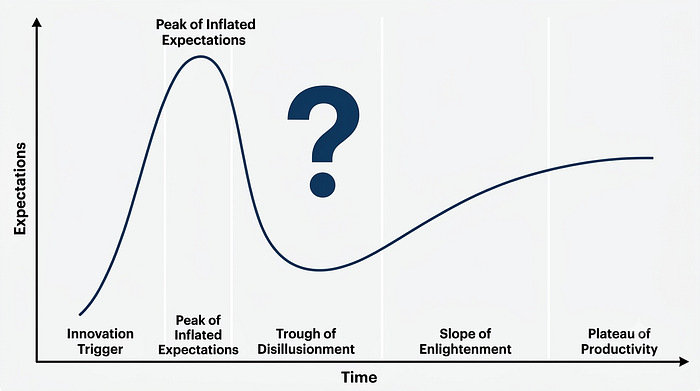
I believe AI will follow the same pattern, with the current challenge being to guess where we stand in the curve and how to minimize the negative impacts that some parts of riding this wave have.
To be fair, the biggest difference from the other disruptive technologies is that AI's reach is bigger than all others, as it is exposed to most segments of society, more than just those who develop and maintain the software solutions we all use.
Keep this always in mind when someone says that the sky is falling…
Managing the Noise
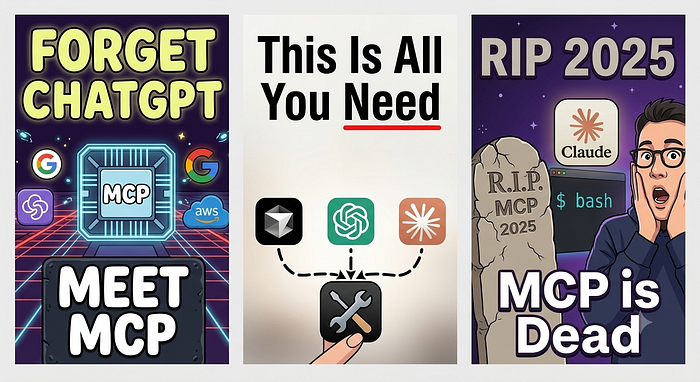
Every week we see a revolutionary workflow, tool, agent, or model on Reddit, X, LinkedIn; each one promises to solve many problems and be a superior version of last week's solutions.
Confused? You are not alone.
The reality is that for most of us, especially if you still feel or are in the beginning of your AI journey, all these solutions can lead to worse results due to misuse or develop even more anxiety because of the urge to master yet another concept.
So how to navigate this with confidence? I recommend a simple 4-step approach:
- Start simple
- Monitor the news
- Ask the right questions
- Adapt
So let's see what that means in practice.
Start Simple
Simple is kept vague here, but essentially means whatever is your current level of knowledge and experience in using AI.
I wrote a few articles introducing some of the concepts before, so you may want to check them: instructions and prompts, MCP x Skills, Agent Telemetry, Managing Costs, and Spec-Driven Development.
The goal is not to master, but to have awareness and start building your vocabulary on the topic.
Maybe your company has already settled on a model provider and an authorized harness or an agentic-enabled IDE. That can be a double-edged sword, but having a starting point can remove a lot of the initial confusion.
If there is no mandatory tool, you have many to choose from. More than recommending the best one, let me share some that can be a good start:
- Visual Studio Code + GitHub Copilot
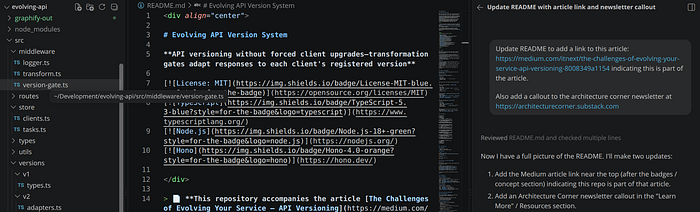
It is a free code editor that has native support for GitHub Copilot (more on this later) and a vast ecosystem of extensions.
It gives you the closest experience to the traditional IDE you are used to, with integrated agentic capabilities.
GitHub Copilot gives you access to multiple models from OpenAI, Anthropic, Microsoft, X/AI, etc.
- Claude Code
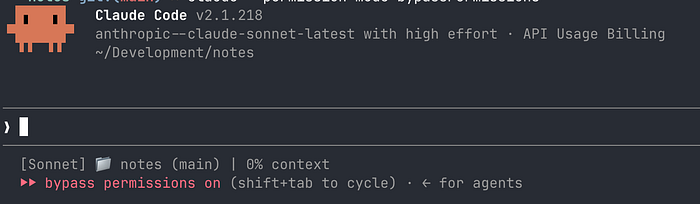
A terminal-first experience tool that officially only uses Anthropic models.
- OpenCode
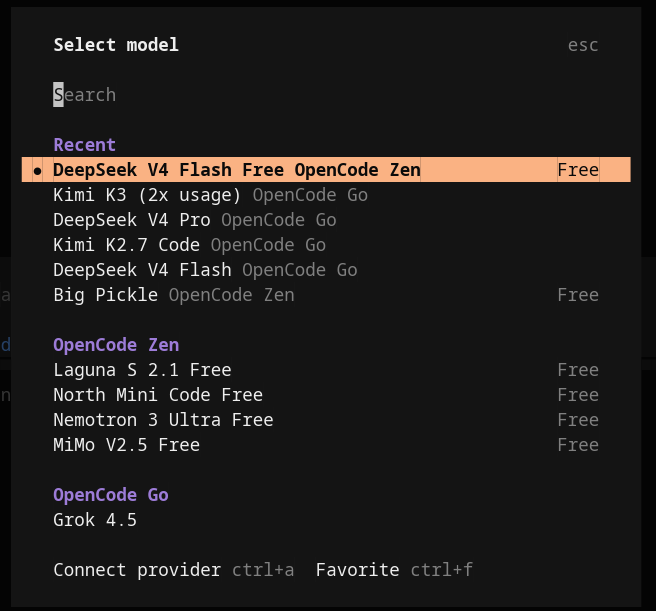
A terminal-first experience, similar to Claude Code, but with the concept of supporting multiple providers (and models) to choose from.
As of 2026, Claude Code and its models have gained a lot of popularity, so ignoring it would be a mistake. At the same time, the multi-model/provider capability that Visual Studio Code or OpenCode provide comes in handy when we factor in more advanced techniques (such as orchestration and Spec Driven Developer).
All of the above have subscription modes that start relatively cheaply. My recommendation if you are unsure:
- If you are used to the IDE experience, start with Visual Studio Code + GitHub Copilot
- If you are open (or comfortable with the challenge), start with Claude Code or OpenCode
Ultimately, all other options (Cursor, Codex, GitHub Copilot CLI, Pi) offer similar capabilities, so start with one and see what works for you.
Monitor the News
Whatever is your source of information (Reddit, X, YouTube, etc), follow what is being discussed, but don't feel that you have to engage with every single one.
What I do is take notes during the week of all the items I read that seem interesting and why. For example, it could look like this:
- OpenCode Profiles for Orchestration/Model selection | How can I use it to keep costs and speed up development
- Graphify for Knowledge Graph of my codebase | Can it reduce the input tokens?
- …
Then I pick one of them to dig deeper based on whatever interests me (or I feel would have the biggest impact).
The key here is to have a low-effort way to keep track of what you care about. After a while, you may start even start recognizing patterns that help you say "this is another solution for the problem X like tool Y".
Ask the Right Questions
If the previous stage gave you candidates to explore further, this aims at finding the value for you.
There are so many AI Heroes, LLM Wranglers and GenAI Whisperers out there, all selling their solutions as the best and words of wisdom. However, if you ask, "How many successful projects in production based on a legacy/brownfield code base did you apply those to?" The answer is probably not that many.
So the takeaway is that for each candidate you decide to investigate, start by trying to come up with answers for the following questions:
- What is this supposed to provide as value (quality, cost, speed, …)
- Who is it aimed for (developer, architect, QA, …)
- Does it apply to my context (team, project size, language, infrastructure)
- How would I use it with my context (changes to the tooling, CI pipeline, …)
Your context appeared twice for a good reason. Some solutions out there may be great for a single dev, in a green field or relatively small project. How about your team with a solution spanning multiple projects/repos?
Adapt
After looking closer and trying some of the candidates, you are bound to find something that brings value to you. Now it is time to incorporate it into your workflow.
That means taking what was already working and adding (and maybe removing) things to make it better.
Tired of repeating yourself? You may have found a new skill to help.
Need to continue work between sessions? Add an external memory
Having to redo the work? Introduce some degree of SDD
Hitting the token limit? Use a token optimization
And the list goes on. This is a rapidly changing field, so the challenge is to maintain a healthy relationship with it, while adapting your ways of working as it evolves, beyond the hype.
Many of us build our workflow after many years of trial and error, and tend to keep it fairly static after that. Introducing changes that may be short-lived needs to be done respecting the productivity aspect (unless you're paid just to try new stuff…).
Is My Job Going to Disappear?
It depends, but if it doesn't, it will almost certainly change, and for good.
The news about layoffs affecting the tech sector persists all the way to 2026 with no clear indication that we reached the end. While there are many reasons why they have happened, AI is one factor.
We find stories about small teams (sometimes of a single person) who used agents to develop full applications at record time, at least when compared to the pre-AI alternative.
So somewhere between the vibe-coders and naysayers lies the sweet spot where talent can reap real, sustainable productivity gains. Guess what, you are that talent, as long as you are open to changing how you approach your craft and focus on what is still the differentiating factor: knowing what a good solution is!
This is an opportunity to deepen your focus on understanding the domain (the problem you need to solve) and educating yourself on the various patterns, tradeoffs, and decision-making processes that are needed to design the right solutions.
What will be your next move?